



Artificial intelligence and its transformative role in the pharmaceutical industry
Artificial intelligence (AI) is not a future promise in the pharmaceutical world: it is already a reality that is reshaping how drugs are discovered, tested and produced. Beyond automating operational processes, AI is helping companies dramatically shorten R&D cycles, make more data-driven decisions and move toward more individualised medicine. In this scenario of accelerated transformation, having specialised AI profiles is becoming increasingly urgent. Platforms such as Shakers provide agile and scalable access to highly qualified freelance talent, without the rigidity of incorporating new profiles into the workforce.
AI-driven drug discovery: real opportunities
Traditionally, developing a new drug can take more than a decade and consume millions. But today, thanks to AI, many of the slower stages are being simplified. In what specific ways? For example, by using models that process thousands of molecular combinations instantly to predict which ones might have therapeutic effects. Instead of testing at random, companies can now prioritise judiciously. For projects of this scale, expertise in computational pharmacology is not optional; it is key. That's why more and more organisations are turning to a freelance artificial intelligence specialist, capable of customising algorithms to the specifics of the study, shortening the experimentation curve and optimising development investment.
AI in medical diagnostics: more agile analysis, more accurate decisions
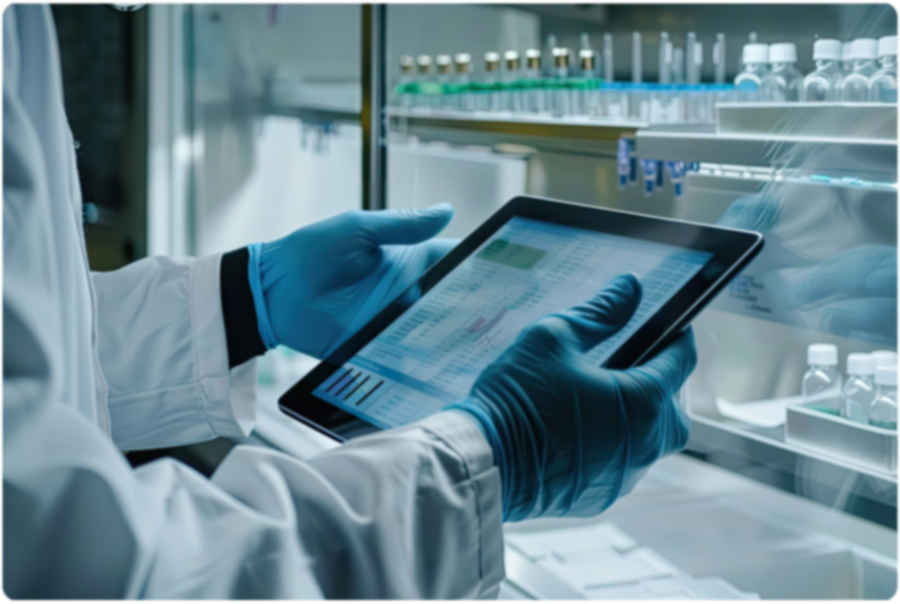
One of the most visible (and promising) uses of AI in healthcare is in diagnostic imaging. Algorithms trained with large volumes of medical data make it possible to detect patterns that often go unnoticed by the human eye. This translates into earlier diagnoses and treatments that are better tailored to the patient. In complex pathologies, this acuity can make a big difference. For these advances to reach clinical practice, collaborative work between medical teams and technical profiles is required. A freelance machine learning engineer, for example, can provide the technical expertise needed to build robust models that continuously learn from real medical outcomes, improving with each iteration.
Faster and more efficient clinical trials thanks to AI
Conducting a rigorous clinical trial involves time and resources, but that doesn't mean the process has to be slow by default. With AI, it is possible to detect complex patterns in patient data, predict treatment responses and, most importantly, better segment test groups. The result is more agile planning and faster detection of adverse effects. This not only speeds up time to market, but also improves the quality of clinical outcomes. How do you incorporate these advances without starting from scratch? Through platforms such as Shakers, companies can find healthcare data specialists to design predictive models tailored to each clinical context. Bringing on board an expert with hands-on experience in biomedicine and advanced analytics can make the difference between a stalled trial and one that moves forward with speed and accuracy.

Smart pharmaceutical production: AI for a more agile factory
Automation is not new in the pharmaceutical industry, but AI takes this evolution to another level. Today, it is possible to monitor the entire production line in real time, detect anomalies before they affect quality, and dynamically adapt processes according to the conditions of each batch. These intelligent systems not only bring efficiency but also reduce waste and improve traceability. To achieve this degree of control, it is essential to integrate AI expertise with industrial automation. Here, freelance specialists who have already worked in complex production environments can accelerate the transition. Collaboration with these profiles multiplies operational responsiveness and makes it possible to implement improvements without long adaptation curves.
Building hybrid teams: the approach that drives innovation
Faced with a constantly evolving technological reality, traditional structures are falling short. The most agile companies are combining their internal teams with specialised freelance talent to better adapt to the challenges of each project. This hybrid approach makes it possible to scale quickly, incorporate timely know-how and, above all, keep up with the pace of change. The key is finding the right people at the right time, something Shakers facilitates by using AI to connect companies with professionals with real pharma experience. This diversity of perspectives not only brings problem-solving, but it also opens the door to disruptive ideas that can become competitive advantages in the medium and long term.
.png?width=949&height=458&name=Sin%20t%C3%ADtulo-109%201%20(2).png)
A new horizon for the pharmaceutical sector
Artificial intelligence is not only optimising, but rethinking how every medical and operational challenge is addressed. From identifying more promising active ingredients to offering more personalised and safer therapies, its impact extends along the entire value chain. But no algorithm advances on its own: behind it are professionals who design, train and refine it. At such a crucial time for the industry, incorporating that talent with flexibility may be the step that determines who leads and who is left behind. If you are considering how to apply AI solutions in your organisation, or want to explore what profiles can help you scale your operations, contact us. Together, we can shape the future of healthcare, with technology and people working hand in hand.